Events — A Convergent Technology Business Unit
Event technology and production support for corporate, government, and public environments.
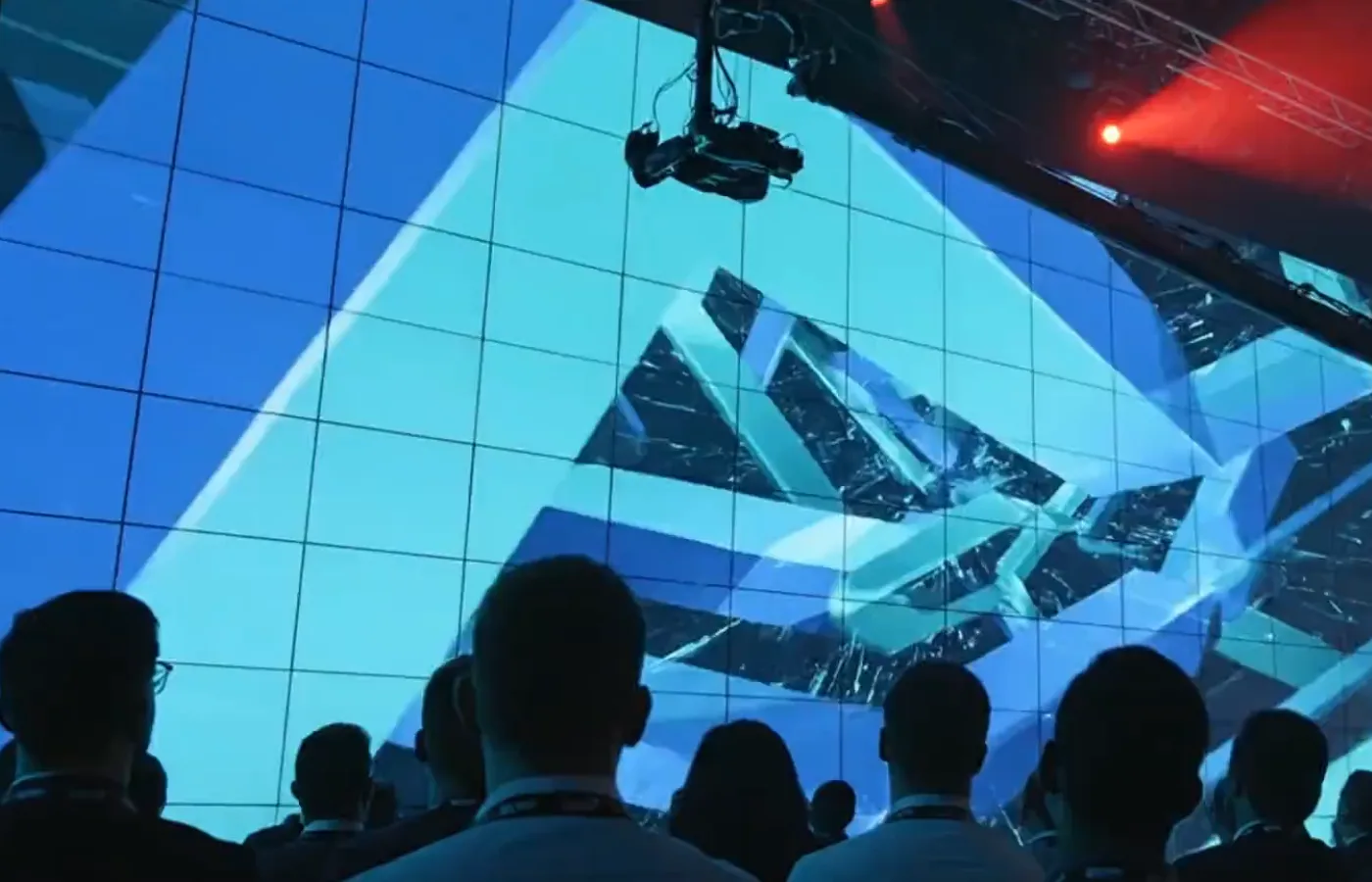
PREVIEW MEDIA — REPLACEMENT REQUIRED. Library frame from the controlled CT design pack. Not a photograph of a Convergent event or project.
Detailed capabilities, technical information and enquiry routes for this discipline are published on its own website.
Every other kind of technical work gets to fail quietly and be fixed before anyone notices. Live production does not. The room is full, the programme has started, and whatever the system does next is the thing that happened.
That single constraint changes every engineering decision. Redundancy is not a specification line, it is a rehearsal outcome — a second path only counts if somebody has watched it take over. Documentation is not a handover deliverable, it is the show file the operator is holding. And the schedule is not a plan, it is a countdown, because the doors open whether or not the last cable is dressed.
It also changes what finished means. A permanent installation is finished when it is commissioned, and it stays finished. A live build is assembled, proved, operated and removed inside a window measured in days, and then the same crew does it again somewhere else. What carries across is not the equipment. It is the method.
Load-in, build, focus, rehearsal and doors are fixed points. Everything technical is designed backwards from them rather than fitted into whatever time is left over.
A second path nobody has ever switched to is a second path nobody knows about. Failover is induced in rehearsal, watched, and signed.
Show control, positions and the show file are designed for the person who will be running them under pressure, not for the person who configured them calmly.
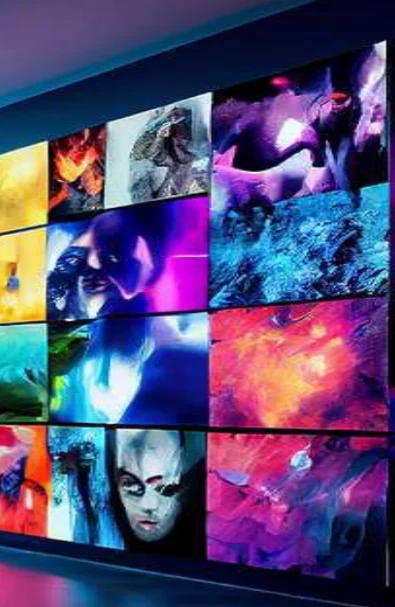
It is ready when the processing behind it has been proved to every panel, the content has been checked at the size it will actually be seen at, and somebody has switched to the backup path and back while there was still time to fix what that revealed. Until then it is a lit wall.
Every live environment is brought to readiness one state at a time, and each state is only reached once the one before it has been proved. This is that sequence — the order a room actually comes up in, and what has to be true before the next cue can be called.
Stage and set in position, screens dark, house lighting up, every position cabled and labelled. Nothing is running, and everything is where the drawing said it would be.
Build complete against the technical plan
LED and projection brought up, processing and playback proved to the surface, content loaded and checked at size, and the backup path switched to and back.
Signal proved to every surface, on both paths
Fixtures focused, states built and recorded — walk-on, presentation, panel, award — and checked against the camera position where there is one.
States recorded in the lighting file
Reinforcement set for the room and the audience it will actually hold, microphone positions allocated and rung out, and the presenter briefed on what they are holding.
Sound check and rehearsal sign-off
Operators at position, cues called against the running order, and a technician on the systems rather than on a phone. From here the job is not to build anything — it is to make sure nothing changes that was not called.
Show operation against the running order
A live environment is not five procurements that happen to arrive at the same venue. Each of these is designed against the other four — the lighting state is built for what the screen and the camera are doing, and the audio is set for a room whose surfaces the staging has just changed.
Screen configuration, processing, playback and redundancy, planned around the content, the sightlines, and the ambient light the room will actually have once it is full.
Stage, audience and presentation lighting designed to the programme and to the conditions in the room, with states built and recorded rather than improvised on the night.
Stage and set arrangement designed against sightlines, circulation and the technical positions everything else needs — because where the stage goes decides where every other system can be.
Speech and programme reinforcement, source management, and the signal architecture that joins them — designed for the room and the audience size on the day rather than for a specification.
Show control, operator positions, rehearsal and the crew who run the programme — the family that turns four sets of equipment into an event that happens on time.
The technical outcome is largely fixed by decisions taken in an empty venue with the lights on. These are the ones that matter.
Access, floor conditions, ceiling and fixing conditions, existing services, sightlines, and the doors the equipment has to come through. Venues differ from their drawings, and finding that out on load-in day is expensive.
What happens on stage, in what order, for how long, and who is standing where. The technical design follows the running order rather than the equipment list.
Load-in, build, focus, check and rehearsal placed against a fixed doors time, with the dependencies between trades made explicit rather than assumed.
What the venue provides, what the client provides, what content arrives and when, and where this Business Unit stops. Written down before anyone travels.
The Group standard applied to live work, scaled to the requirement. Rehearsal is treated as a stage, not a courtesy.
Brief, venue survey and programme review: audience, content, sightlines, access, load-in windows and the constraints the venue imposes.
You receiveVenue survey and technical brief
Technical design and equipment schedule developed against the programme, with power, rigging and safety requirements calculated.
You receiveDesign package and equipment schedule
Venue, contractors, content owners and production scopes sequenced against the load-in window and the rehearsal schedule.
You receiveProduction schedule and responsibilities
Load-in, build, focus, sound check and full rehearsal, with redundancy proven on the paths that cannot fail before doors open.
You receiveRehearsal sign-off and show file
Show operation, on-site crew and controlled de-rig, with a post-event record for the next occurrence.
You receiveEvent record and de-rig report
Events, Audiovisual and IT Infrastructure meet in the same buildings and are regularly assumed to be one capability. They are not, and the difference is written down before a project starts rather than discovered during one.
Temporary systems brought in for a programme, operated live, and removed afterwards.
Permanent installed audiovisual environments that stay in the building and are maintained there.
How the seam is closedA defined handover point between the permanent estate and the event installation, agreed at survey.
Production systems and the show network that serves them for the duration of the event.
The enterprise network and the permanent connectivity the venue runs on.
How the seam is closedBandwidth, addressing and access requirements agreed before load-in, not requested on the day.
Technical production within the scope agreed at survey.
The building, its permanent services, and the conditions of use it imposes.
How the seam is closedA written record of what the venue provides and what is brought in.
Tell us what you are planning, where the scope sits and the outcome that matters. Your enquiry is directed to the Business Unit that owns that field, and you deal with that team directly.
Most engagements are led by a single Business Unit working directly in its field. Where a requirement genuinely crosses disciplines, the Group coordinates the points where those specialist scopes meet, without diluting the expertise behind each one.
ISO 9001:2015, ISO/IEC 27001:2022, ISO 37001:2016 and ISO 45001:2018, within the certified scope of Data Centre Solutions and Services. The certified scope is stated on every page where the standards appear.
A consistent approach across every Business Unit, scaled to the requirement: understand the environment and constraints, engineer against the relevant standards, coordinate where specialist scopes meet, deliver and commission the agreed scope, then support it to the contracted model.
Company facts, capabilities and certified management systems are assembled for procurement officers and evaluation teams, with a controlled prequalification pack available on request through the Evaluation Center.
ISO 9001:2015, ISO/IEC 27001:2022, ISO 37001:2016 and ISO 45001:2018, within the certified scope of Data Centre Solutions and Services.
| Standard | Subject | Certified scope |
|---|---|---|
| ISO 9001:2015 | Quality management | Data Centre Solutions and Services |
| ISO/IEC 27001:2022 | Information security | Data Centre Solutions and Services |
| ISO 37001:2016 | Anti-bribery management | Data Centre Solutions and Services |
| ISO 45001:2018 | Occupational health and safety | Data Centre Solutions and Services |
Convergent’s Events team works with project leads, communications offices and government programmes — from the first venue survey through rehearsal, show operation and de-rig.